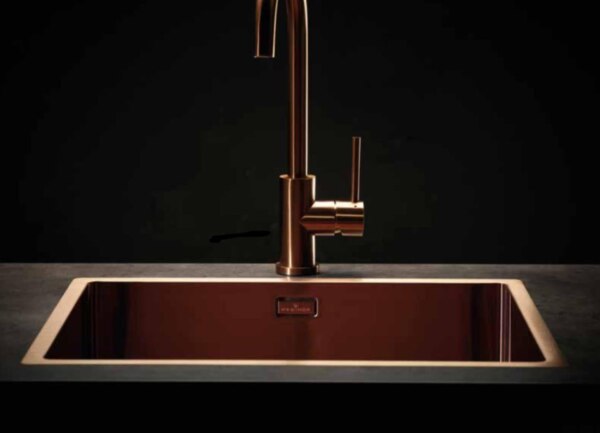
The right kitchen sink is determined by your cookware, cabinet dimensions, worktop material, plumbing and cleaning habits—not by appearance alone. By the end, you will be able to compare bowl layouts, verify measurements, assess materials and confirm whether the sink will work with your tap, waste system and accessories.
Key takeaways
- Choose bowl capacity from your largest pan and daily washing routine.
- Measure cabinet width, worktop cut-out and waste-pipe position before ordering.
- Compare stainless-steel grade, thickness, finish and insulation—not appearance alone.
- Match the drain, tap holes, overflow and accessories as one system.
Match the Sink Configuration to Your Kitchen Workload
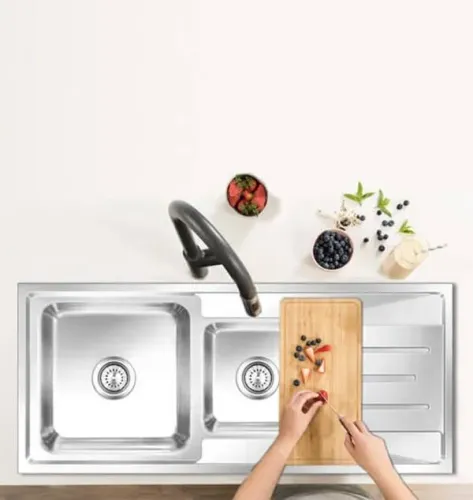
Choose the bowl capacity from your largest pan, washing routine and available counter length, not from appearance alone. A single-bowl sink suits frequent washing or soaking of roasting trays; a 1.5-bowl sink adds a smaller basin for rinsing, draining or keeping food separate.
A double-bowl sink improves separation but gives each bowl less usable space, which can make large cookware awkward.
| Option | Best match | Counter-space and usability trade-off |
|---|---|---|
| Single-bowl sink | Large pans, baking trays and hand-washing cookware | One generous basin; no separate area for rinsing or food preparation |
| 1.5-bowl sink | Washing in the main bowl while rinsing or draining in the small bowl | Flexible daily use, but both bowls occupy more length than one basin |
| Double-bowl sink | Separate washing and rinsing, or households without frequent dishwasher use | Strong separation; smaller bowls limit soaking and cleaning oversized cookware |
| Undermount sink | A clean, wipe-in countertop edge around the basin | Preserves a streamlined surface, but needs a suitable stone or solid-surface worktop and mechanical support |
Check the bowl’s clear internal length, width and depth against your largest pan before ordering. If a dishwasher handles most plates, a single-bowl sink often recovers valuable counter space; if you wash by hand, separation can justify the lost footprint.
Do not choose a very deep bowl without checking the cabinet, waste fitting, trap and drawer clearance. Inspect the fall toward the waste outlet, corner radius and strainer arrangement: a flat bowl leaves water behind, while tight corners take longer to clean.
Measure the Cabinet, Worktop and Plumbing Before You Order
The sink’s advertised overall length and width do not confirm that it will fit. Check the exact model drawing before ordering, because a sink can fit the worktop while being too large for the base cabinet.
1. Measure the cabinet width inside the side panels, not the outside carcass. Compare that clear width and the cabinet’s front-to-back depth with the drawing’s minimum cabinet width and installation depth. Check for hinges, drawer runners and internal rails that could obstruct the bowl.
2. Mark the countertop cut-out dimensions from the template, including length, width and corner radius. Confirm the tap-hole position and the required distance from the worktop edge, splashback and wall. Do not cut from the sink’s overall dimensions.
3. Measure the countertop thickness and identify its material before choosing the mounting method. An undermount sink needs a properly fabricated stone or solid-surface worktop, plus mechanical support for the bowl; sealant alone is not structural support. A laminate or post-formed top may require a top-mount model instead.
4. Check the bowl depth against the cabinet height and the plumbing space below. A deep bowl can push the waste fitting and trap into a drawer or storage area. Allow room for the strainer, waste pipe, trap, overflow connection and any dishwasher or disposer hose without sharp bends.
5. Compare the drawing’s clear internal bowl length, width and depth with your largest pan, then confirm the waste outlet sits where the existing plumbing can reach without relocating the cabinet.
Compare Sink Materials and Stainless-Steel Specifications
Choose the material according to the damage your kitchen is likely to create, not appearance alone. AISI 304 stainless steel is the common kitchen-sink grade and is often labelled 18/8 stainless steel.
316 stainless steel contains molybdenum and resists chloride-rich conditions better, but neither grade is completely rust-proof; “premium stainless steel” proves nothing without the grade.
| Material | Durability | Noise | Heat | Stains and scratches | Maintenance |
|---|---|---|---|---|---|
| Stainless steel | Resists impact and chipping; grade affects corrosion resistance | Louder unless sound-deadening pads and underside coating are fitted | Handles hot cookware well | Can scratch; chlorine residue and embedded iron can stain or corrode | Clean brushed surfaces with the grain using a soft cloth; rinse and dry |
| Granite composite | Tough against impact and everyday abrasion | Quieter and less hollow-sounding | Handles normal hot pans; avoid sudden thermal shock | Dark colours hide marks; light colours can show deposits and some scratches | Wipe promptly, avoid abrasive powders, and remove mineral deposits |
| Ceramic | Hard, smooth and stain-resistant, but edges can chip or crack from impact | Usually quieter than bare steel | Handles heat, but thermal shock can damage the glaze | Resists scratches; chips expose damaged areas | Simple daily cleaning, with care around sharp or heavy cookware |
Do not compare steel by gauge alone: conventions vary, and a lower gauge number normally means thicker metal. Ask for the grade and actual thickness in millimetres; thickness affects rigidity and noise, not corrosion resistance or fabrication quality.
A sink that flexes, has poorly bonded pads or lacks continuous support can still transmit noise and strain the worktop seal.
Choose the Drain, Tap Holes and Accessories as One System
A sink’s drain position, overflow and tap-hole layout must work with the fittings below and above the worktop. Check the technical drawing, not only the overall sink size: confirm the waste size, outlet location, bowl depth, overflow connection and available clearance for the mixer, filtered-water tap and backsplash.
- Match the basket strainer and waste kit to the sink outlet and the plumbing trap. A different waste size or an offset drain can leave the trap misaligned, causing leaks or forcing awkward pipe bends.
- Choose a waste fitting with a dishwasher connection if the dishwasher hose will discharge through the sink waste. A disposer needs its own compatible waste flange, dishwasher inlet and air-gap arrangement where local plumbing rules require one.
- Count tap holes and measure their centre-to-centre spacing. Confirm that the mixer’s mounting shank fits the ledge, while a filtered-water tap has a separate hole and enough clearance for its handle and spout.
- Check the overflow opening and hose route against the waste assembly. A blocked, incompatible or poorly sealed overflow can send water into the cabinet.
- Test grids, chopping boards, colanders and rolling mats against the bowl’s internal dimensions. A proprietary accessory that obstructs the mixer or overflow is expensive to replace.
| Connection | Verify before ordering | What goes wrong if mismatched |
|---|---|---|
| Drain | Drain position, waste size and basket strainer | Standing water, leaks or an unreachable trap |
| Taps | Hole count, spacing, ledge depth and backsplash clearance | Mixer collision or no space for filtered water |
| Waste appliances | Dishwasher spigot, disposer flange and trap outlet | Unusable hose connection or cabinet pipework conflict |
Inspect the Sink’s Usability Before Making the Final Choice
Do not approve a sink from its photograph. In the showroom, run your hand across the bowl and inspect the underside; in the technical drawing, verify the details that determine whether it will drain, stay quiet and remain serviceable.
1. Pour a small cup of water into the bowl. It should follow a visible fall to the waste outlet, not collect on a broad, flat surface. Check the waste diameter, strainer type and overflow position against your planned trap and plumbing.
2. Look directly into each corner and note the corner radius. Tight or zero-radius corners add rectangular capacity but trap food and need more scrubbing; a larger radius is easier to wipe clean.
3. Tap the underside lightly. Sound-deadening pads should be firmly bonded around the bowl, while an underside coating helps limit condensation and drumming. Neither replaces continuous cabinet support: a flexible sink can strain the worktop seal.
4. Ask for the model drawing and find an explicit reference to EN 13310, plus the minimum cabinet width, cut-out, bowl depth and tap-hole positions. A deep bowl can push the trap into a drawer.
5. Test every grid, colander, chopping board and rolling mat in its actual ledges. Ask Lifestyle Galleria whether replacements use standard dimensions or a proprietary size, and confirm they will not obstruct the mixer or overflow.
Frequently asked questions
How do I choose between a single-bowl and 1.5-bowl kitchen sink?
Choose a single bowl for frequent washing or soaking of large roasting trays. Choose a 1.5-bowl sink when you need a smaller basin for rinsing, draining or separating food.
What measurements should I take before ordering a kitchen sink?
Measure the cabinet’s internal width, the worktop depth and available counter length, the required cut-out, and the waste-pipe position. Confirm these measurements against the sink’s installation drawing.
What stainless-steel specifications should I compare?
Compare the steel grade, sheet thickness, surface finish, bowl depth, insulation and resistance to dents, stains and heat. Check the manufacturer’s technical specification rather than judging by appearance.
Which sink accessories and plumbing details must match?
Check the waste outlet size, overflow, drain arrangement, tap-hole position and number, basket strainer, siphon and any drainer or chopping-board accessories. Confirm that the selected parts fit the sink and your existing plumbing.