A tile that looks right in a catalogue can fail when exposed to shower water, Chennai’s outdoor conditions, heavy foot traffic, cleaning chemicals or an uneven substrate. You will be able to compare tile types, match formats and finishes to each space, verify technical ratings, and approve a practical installation plan before ordering.
Key takeaways
- Assess traffic, moisture and cleaning needs before choosing tile colour or finish.
- Use slip-resistant surfaces for wet floors and high-traffic areas.
- Confirm tile size, substrate limits, adhesive and grout before ordering.
- Keep spare tiles from the same batch for future replacements.
Start with the space, traffic and exposure—not the tile display
Choose tiles by the space’s traffic, moisture, cleaning routine and exposure before comparing colours or displays. Space-by-space tile selection prevents a polished bathroom floor from becoming slippery or a delicate residential tile from failing under commercial use.
| Space | Prioritise | Main decision |
|---|---|---|
| Living rooms and bedrooms | Comfort, appearance and manageable maintenance | Living room tiles can use larger formats; bedroom tiles should suit quieter, warmer-looking interiors. |
| Kitchens and bathrooms | Stain resistance, wet-use slip performance and easy cleaning | Kitchen tiles need resistance to oil and food stains; bathroom floors need a tested wet-use classification, not gloss or the word porcelain. |
| Balconies and terraces | Outdoor exposure, drainage and thermal movement | Choose tiles rated for exterior use and keep movement joints flexible; rigid grout at edges can crack and lift tiles. |
| Offices and hotel rooms | Daily foot traffic, chair movement and cleaning | Select commercial-use flooring with suitable abrasion and stain resistance. |
| Retail areas, restaurants and corridors | Peak traffic, trolley loads, chemicals and replacement access | Confirm intended-use classification, slip testing, chemical resistance and an installation system suited to heavy service. |
In a shower, the tile does not provide waterproofing. Check the membrane, drain connection, corners and pipe penetrations, then confirm that the floor slopes correctly to the drain.
Before approving any area, record:
- Expected traffic, wheeled loads and cleaning chemicals.
- Wet, dry, indoor or outdoor exposure.
- Shade, calibre and lot numbers, with cartons retained for future repairs.
- Perimeter gaps, changes of plane and structural joints, which need flexible treatment rather than rigid grout.
Compare tile materials and performance specifications
Choose material by water absorption, surface safety and traffic exposure, not by the product label alone. A hard, polished tile can still become dangerous when wet.
| Material | Key specification | Suitable use |
|---|---|---|
| Ceramic tiles | Often higher absorption; check ISO 13006 class and glazed-surface PEI rating | Interior walls, bedrooms and light-to-moderate residential floors |
| Porcelain tiles | BIa absorption of 0.5% or less; verify wet-use slip classification | Bathrooms, kitchens, balconies, exteriors and busy interiors |
| Vitrified tiles | Confirm the declared absorption rather than relying on “vitrified”; assess slip, breaking strength and stain resistance | Living rooms, offices, retail floors and other demanding areas |
| Full-body tiles | Colour and pattern run through the body, reducing the visual impact of chips; confirm abrasion and chemical resistance | High-traffic corridors, shops, hotels and commercial floors |
PEI measures abrasion resistance on glazed tiles only. It does not measure slip resistance, shower-floor safety or the performance of unglazed porcelain. Ask for the tested wet-use classification, especially for a shower floor, balcony or entrance exposed to rain.
For stains and cleaning chemicals, check the manufacturer’s resistance data and select a grout compatible with the exposure. A shower also needs a formed slope to the drain, a waterproofing membrane, sealed corners and protected pipe penetrations; tile and grout are not the waterproofing layer.
Carry movement joints and perimeter gaps through the finish with flexible sealant, because rigidly grouting every edge can crack grout or tent tiles.
Match tile size to the room, layout and installation limits
Measure the finished room and draw the tile lines before making a tile size selection. A large tile can reduce grout joints in a spacious living room, but it may leave narrow strips beside walls, doorways or fixtures in a small bathroom.
A smaller format follows alcoves, floor drains and changes in direction with fewer awkward cuts.
Plan the grout layout from the room’s centreline, visible edges and fixed fittings. Keep joint widths consistent with the manufacturer’s requirement; do not force rectified tiles into ultra-narrow joints.
Grout is not a movement joint, so carry perimeter gaps, changes of plane and structural joints through the finish with flexible sealant or the specified movement-joint treatment.
Check these installation limits before approving a format:
- Confirm the substrate is flat enough for large-format tile installation: for tiles with an edge of 15 inches or longer, allow no more than 1/8 inch variation in 10 feet and 1/16 inch in 24 inches. Adhesive will not correct a badly uneven floor.
- Measure every doorway, corridor, staircase, lift and turning area. 1200x2400 mm tiles need a safe route, suitable handling equipment and enough installers to move them without cracking.
- Match the format to drainage. A shower floor or balcony that needs multiple slopes may require smaller tiles or planned cut lines.
- Calculate cartons from the actual layout, adding about 10% for a simple installation and 15% or more for diagonal patterns, alcoves or replacement stock. Retain cartons showing the shade and calibre.
Decide where a glossy 1200x2400 mm tile is safe and practical
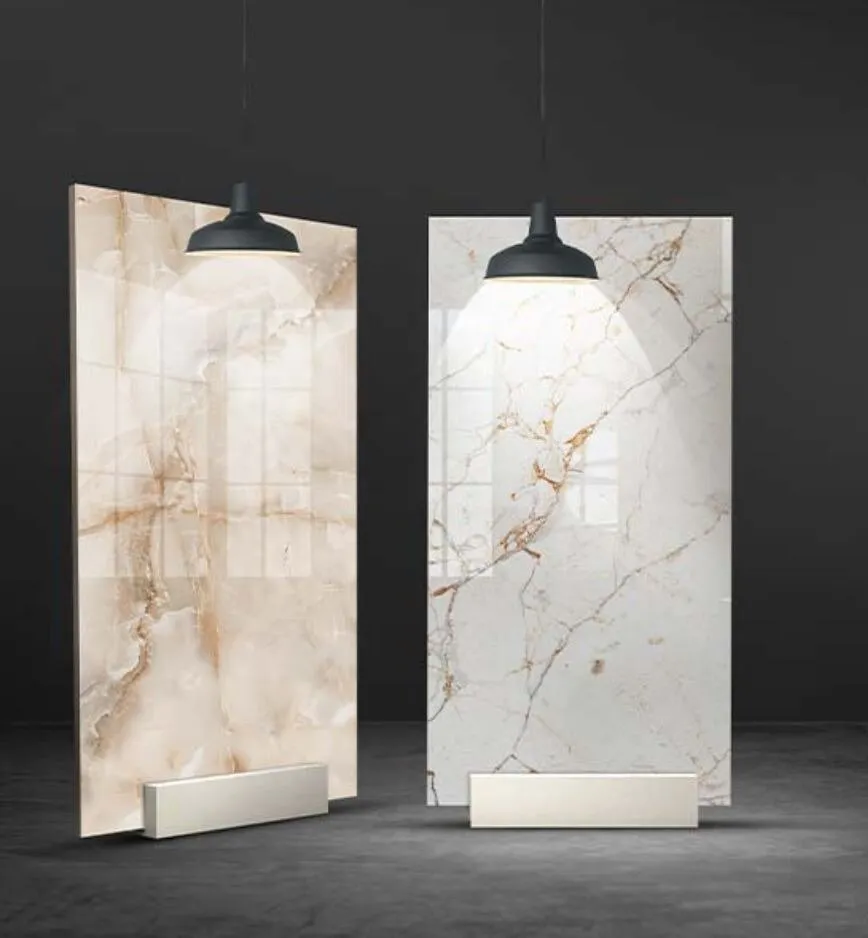
Use a 1200x2400 mm glossy tile where its uninterrupted surface improves the design without creating a slip, handling or maintenance problem. Large glossy tiles suit living-room feature walls, fireplace surrounds, kitchen backsplashes, reception walls and dry bathroom walls. They also reduce grout lines, but every joint and edge becomes more visible.
| Location | Suitability | Choose another option when |
|---|---|---|
| Bathroom walls | Glossy bathroom wall tiles work well because walls do not carry foot traffic | The surface needs a textured, low-glare appearance |
| Living rooms and reception walls | Large glossy tiles create a continuous decorative surface | Access, lifting equipment or wall flatness is limited |
| Dry residential floors | Suitable only with a confirmed floor slip specification and precise installation | The area receives water, grit, heavy traffic or frequent wheeled loads |
| Shower floors | Avoid glossy tiles; shower floor tiles need wet slip performance and accurate falls | Use small mosaics or a suitable textured format instead |
| Commercial floors | Use only after checking intended-use, slip, abrasion, chemical and breaking-strength data | Corridors, retail floors or trolley routes exceed the product’s classification |
A 1200x2400 mm tile needs a substantially flat substrate: keep variation within 1/8 inch in 10 feet and 1/16 inch in 24 inches. Adhesive will not reliably correct hollows. At Lifestyle Galleria, ask to inspect the technical sheet, lifting method and approved adhesive before choosing the slab.
- Carry movement joints and perimeter gaps through the finish; rigid grout at every edge can crack or tent tiles.
Related product
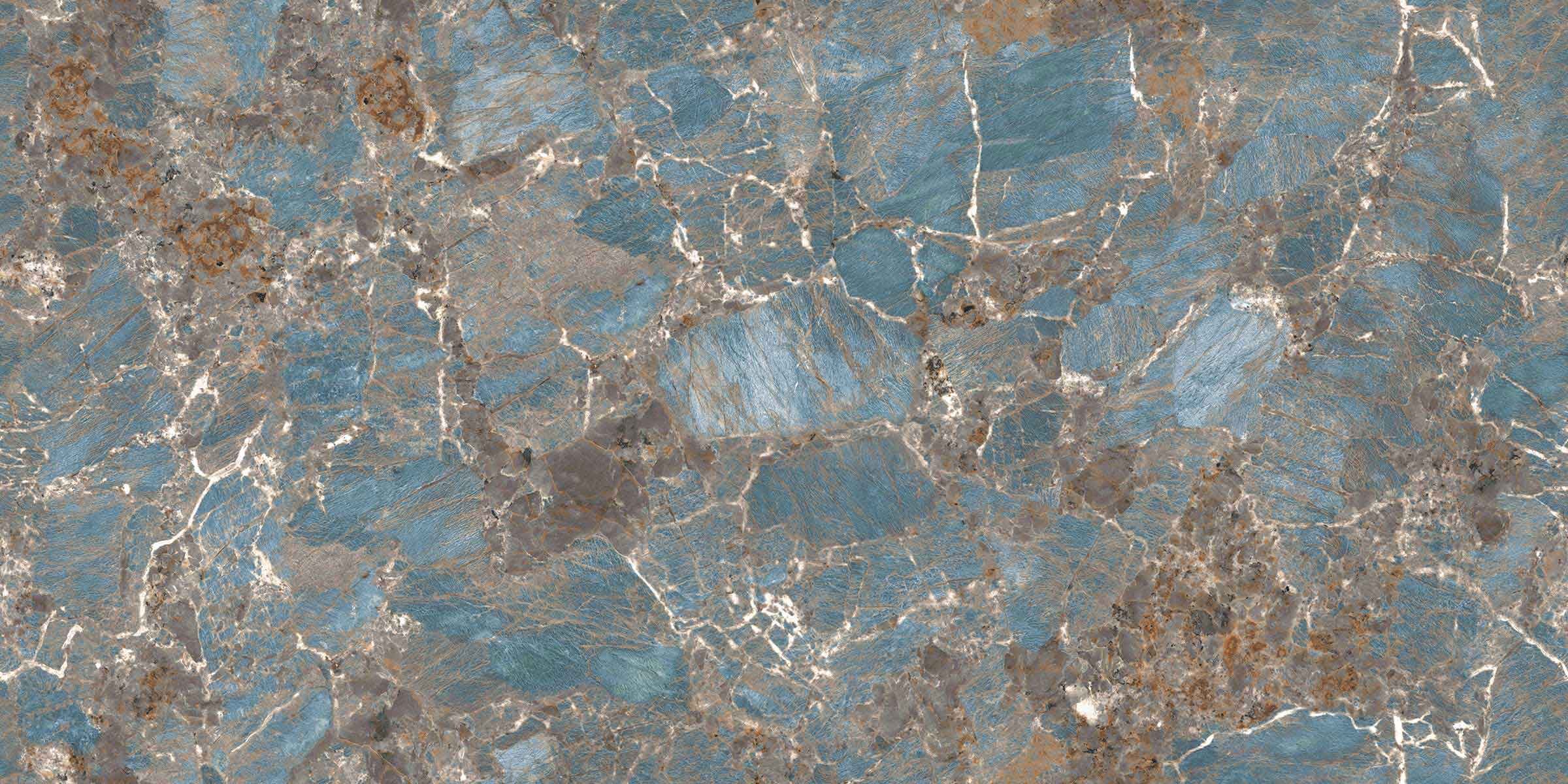 | Tiles Amazonite Blue 1200x2400mm Glossy ₹5760 Glossy 8x4 Tile | 10mm Thickness |
Approve the technical sheet, installation system and replacement plan
Before approving the order, make the dealer and installer match the tile’s documented performance to the room, installation system and future repair plan.
1. Ask for the tile technical sheet showing water absorption, breaking strength, intended-use classification, stain and chemical resistance, surface finish and batch details. For wet interior areas, check the wet slip resistance rating; ANSI A326.3 uses 0.42 wet dynamic coefficient of friction for interior wet applications.
Treat PEI only as glazed-surface abrasion information, not as proof of shower-floor safety.
2. Obtain the installer’s written method for substrate preparation, adhesive, grout, movement joints and edge details. Confirm that the waterproofing membrane covers shower floors, upstands and balcony junctions, with a flood-test record where applicable.
For tiles with an edge of 15 inches or longer, require substrate flatness within 1/8 inch over 10 feet and 1/16 inch over 24 inches; adhesive cannot correct a badly uneven floor.
3. For commercial floor tiles, verify the specified load, trolley traffic, cleaning chemicals, drainage and replacement access instead of relying on a residential abrasion label. Record the approved product code, colour, shade, calibre and batch, then ask the dealer to confirm stock or written replenishment options.
Buy spare tiles from the same batch for breakage, future plumbing work and discontinued ranges.
Approve only after the installer confirms tile quantities, cuts, wastage, transition trims and compatible metalwork in writing.
Frequently asked questions
How should you choose tiles for homes and commercial spaces?
Assess traffic, moisture, cleaning routines and exposure first, then compare tile material, finish and performance specifications.
Are glossy 1200x2400 mm tiles safe for every room?
Use them on suitable walls or dry, low-risk areas after checking slip resistance, handling requirements and substrate flatness; avoid them on wet floors without verified safety performance.
What should you check before approving a tile order?
Review the technical sheet, tile dimensions, water absorption, slip rating, shade and calibre, adhesive system, grout specification and replacement plan.
How does tile size affect installation?
Large tiles need a flat substrate, correct adhesive coverage, careful handling and a layout that avoids narrow cuts around doors, drains and corners.